

Allergic Reactions in Pets: Knowing When to Act Fast
One minute your dog is happily rolling in the grass, and the next, their face is swelling or they’re scratching nonstop. Allergic reactions in pets can escalate quickly. Sometimes it’s just hives, but other times it’s sudden breathing trouble or collapse. Owners often wonder: is this mild or life-threatening? Should we go to the vet now?
When in doubt, fast action is key. Fountain Valley Emergency Pet Hospital is open evenings, weekends, and holidays to handle allergic reactions and other urgent conditions, providing immediate care and clear guidance when seconds count.
Understanding Allergic Reactions in Pets
Common Causes of Allergic Reactions
Allergic reactions occur when your pet’s immune system overreacts to substances that are typically harmless. Common culprits include environmental allergens like pollen, dust mites, and mold spores. Food allergies can develop from proteins in chicken, beef, dairy, or grains. Medications, particularly antibiotics and vaccines, sometimes trigger unexpected reactions. Insect bites and stings from bees, wasps, or even fleas can cause immediate allergic responses.
In Southern California’s warm climate, pets face year-round exposure to allergens that might be seasonal elsewhere. Grass pollens, tree pollens from eucalyptus and oak, and outdoor molds thrive in the region’s mild temperatures, making environmental allergies particularly common among local pets.
Types of Allergic Reactions in Pets
- Anaphylaxis is life-threatening and requires immediate care. Anaphylaxis in cats and dogs can progress within minutes, causing cardiovascular collapse, severe breathing trouble, or loss of consciousness.
- Skin Reactions are most common. Pets may develop red, inflamed patches, intense itching, or raised welts. Hives in dogs often appear within minutes. While uncomfortable, they still need attention to prevent infection from scratching.
- Respiratory reactions range from mild coughing and sneezing to wheezing and respiratory distress, especially if exposure continues.
Recognizing Symptoms You Should Never Ignore
Common Symptoms in Dogs and Cats
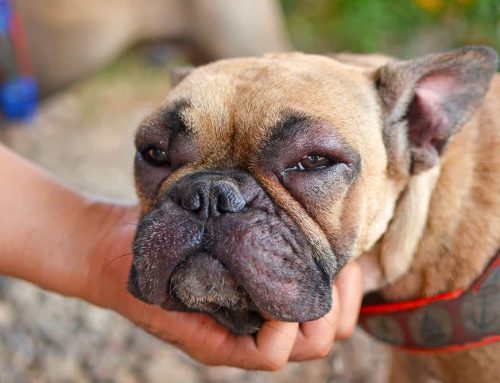
Early signs often start subtly but can escalate quickly. Facial swelling (around eyes and muzzle), red watery eyes, and sudden itching or licking- especially of paws, ears, or belly- are frequent. Digestive signs like vomiting, diarrhea, or decreased appetite may occur. Some pets become restless; others seem lethargic. Because dog allergies symptoms and treatment vary widely, knowing your pet’s normal behavior helps you spot changes fast.
Emergency Symptoms: Seek Immediate Care
Get urgent help for any of the following:
- Trouble breathing, rapid or labored respiration, open-mouth breathing in cats, or blue-tinged gums
- Sudden collapse, loss of consciousness, or inability to stand
- Severe swelling of the face, throat, or tongue
- Persistent vomiting or vomiting with diarrhea
- Pale or white gums, cold extremities, or a weak pulse
Trust your instincts. If something seems seriously wrong, it probably is. When emergency symptoms appear, come right in and contact us immediately rather than waiting.
What to Do in Case of an Allergic Reaction
Immediate At-Home First Aid for Pets
- Remove your pet from the suspected allergen source right away. If they were outdoors, bring them inside and rinse visible allergens from their coat with cool water. Avoid soaps or shampoos unless your vet recommends them.
- Keep your pet calm and limit activity.
- Prevent self-trauma from scratching or chewing; use an Elizabethan collar if available.
- Document the timeline, suspected trigger, and symptoms. Photos of hives or swelling help, as these can change before you reach the hospital.
When to Visit Fountain Valley Emergency Pet Hospital
Seek emergency care if symptoms progress rapidly, affect breathing, or suggest systemic distress. Don’t wait until tomorrow. Request an appointment online, or call for immediate help during emergencies. Our team can manage everything from mild skin reactions to life-threatening anaphylaxis.
On arrival, our triage team assesses your pet immediately and prioritizes care. Treatments may include antihistamines, corticosteroids, IV fluids, oxygen therapy, or epinephrine for severe reactions. Some pets can be sent home with medications; others need intensive care for anaphylaxis.
Prevention and Management of Allergic Reactions
Regular Grooming and Parasite Control for Pets
Consistent grooming helps remove allergens from your pet’s coat and allows early detection of skin changes. Regular grooming such as weekly brushing and routine baths with hypoallergenic shampoo supports healthy skin.
Year-round parasite prevention is essential. Flea saliva is a leading allergen for pets, and flea allergy dermatitis can develop from just a few bites. Use comprehensive parasite prevention to protect against fleas, ticks, and other parasites that can trigger reactions.
Diet and Environmental Management for Pet Allergies
- Consider hypoallergenic diets with novel proteins or hydrolyzed formulations to identify and manage food allergies. Partner with your veterinarian for a structured elimination diet and careful monitoring.
- Reduce environmental allergens at home: vacuum with HEPA filtration, wash pet bedding weekly in hot water, and manage humidity to minimize dust mites and mold. Consistent, proper ear cleaning helps prevent secondary ear infections linked to allergies.
Awareness of Vaccination and Medication Reactions
Vaccines are vital, but a small number of pets may react to components. Work with your vet on managing vaccination reactions, including post-vaccine monitoring and planning for future doses. Keep a detailed list of any medications that previously caused a reaction- this is critical information in emergencies.
If your pet has ever had a reaction to a vaccine, tell your veterinarian before their next set of shots. In most cases, your vet can pre-medicate to help prevent another reaction. It is important not to avoid vaccines entirely, since the diseases they protect against can be fatal. Instead, proactive planning makes vaccination both safe and effective.
Monitor your pet closely for 24–48 hours after vaccination, especially if they have had a reaction in the past. Warning signs of a serious reaction include vomiting, diarrhea, collapse, or difficulty breathing. These require immediate veterinary care. By contrast, normal post-vaccine effects are mild and may include temporary lethargy, decreased appetite, or soreness at the injection site.

Building a Strong Vet Partnership
Importance of Regular Vet Check-Ups
Ongoing communication with your primary veterinarian helps manage allergic tendencies and catch problems early. Regular check-ups establish baselines and allow targeted testing, such as intradermal skin testing or blood panels to identify specific allergens. A strong relationship also ensures smoother transitions between routine and emergency care, making urgent treatments more precise.
The Role of Fountain Valley Emergency Pet Hospital
Our emergency team collaborates closely with primary care veterinarians to deliver comprehensive management for allergic reactions. Our services include advanced diagnostics, intensive monitoring, and specialized therapies for severe cases. We understand how stressful emergencies are and provide clear updates on your pet’s condition, recommendations, and expected outcomes so you can make informed decisions.
From Itch to Emergency: How to Act Fast and Smart
Recognizing the difference between mild irritation and life-threatening reactions can save your pet’s life. Facial swelling, breathing difficulty, sudden collapse, or persistent vomiting warrant immediate veterinary attention- day or night.
Fountain Valley Emergency Pet Hospital offers rapid stabilization, comprehensive emergency diagnostics, and intensive care monitoring for severe allergic reactions. Call ahead if you can to alert our team, and bring any medications or supplements your pet takes. Our emergency veterinarians are ready to provide expert care and support when your pet needs it most. Contact us or request an appointment today to ensure your pet receives prompt attention.
Fountain Valley Emergency Pet Hospital: (562) 554-4700



Leave A Comment